



Commercial
Tarmac Repair in Coventry: Hangar Access Back in Action
Forklifts moving freely in and out of the hangar again.
- Location Coventry, West Midlands
- Project type Commercial tarmac repair
- Project size 15m²
- Cost £2,150 + VAT
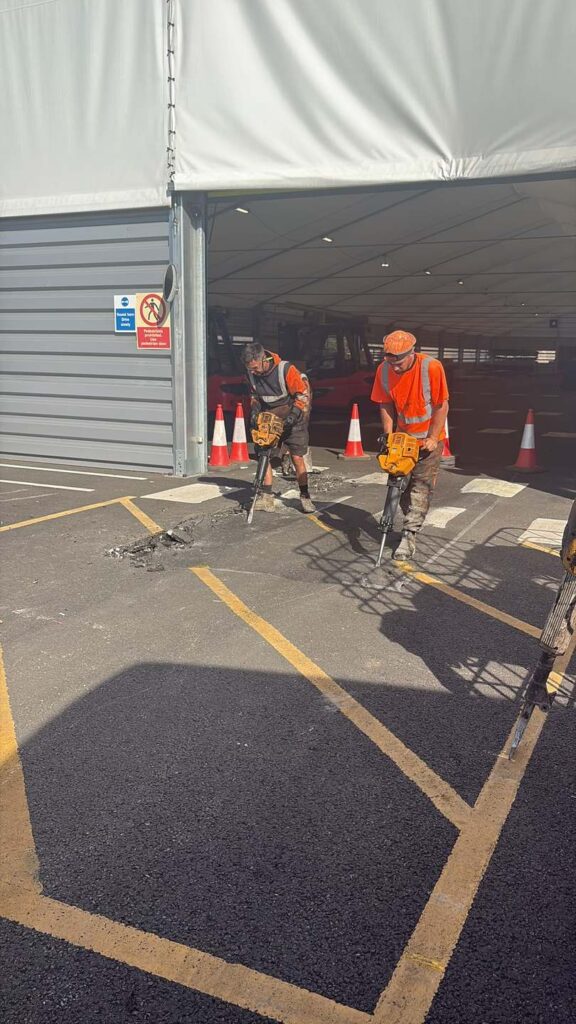
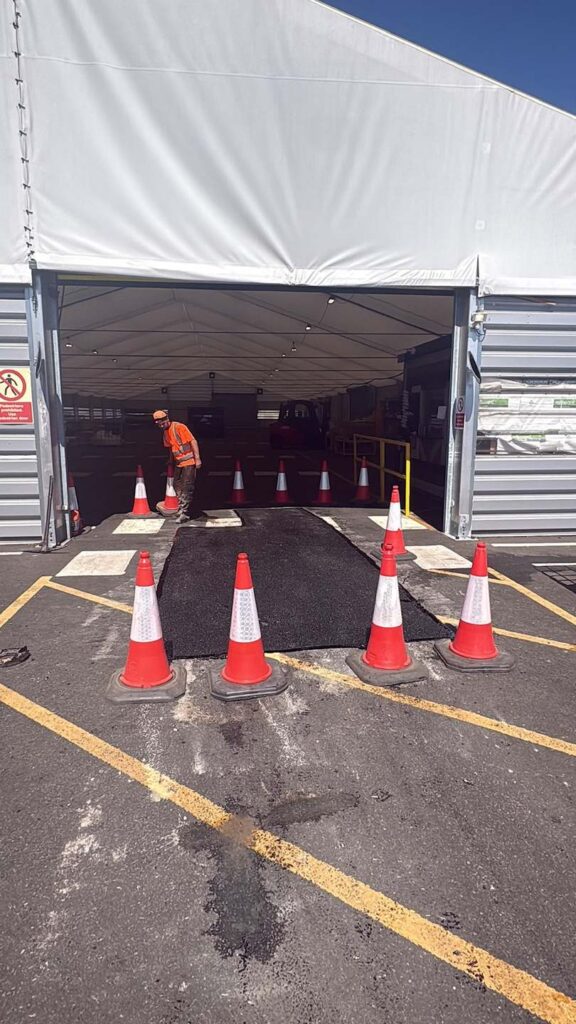
Central Pothole Repairs Ltd carried out a commercial tarmac repair in Coventry for a business whose forklifts were struggling to move in and out of its hangar because of ruts and an uneven surface. We regulated the 15m² area, laid hard-wearing 10mm SMA tarmac and sealed the edges, and the hangar was back in action shortly after we left site.
Why did the hangar area need repairing?
The tarmac at the hangar access had become rutted and uneven. The forklifts were struggling to get in and out of the hangar, which slowed down day-to-day work. The customer needed a smooth, level surface so the forklifts could move freely again.
What did the tarmac repair involve?
-
01
Regulating and clearing the area
We levelled out the ruts and uneven areas across the 15m² and removed all debris, leaving a smooth base ready for surfacing.
-
02
Applying a K1-40 tack coat
This bitumen emulsion is sprayed onto the base so the new tarmac bonds firmly to the surface below.
-
03
Laying 10mm SMA tarmac
Stone mastic asphalt is a dense, hard-wearing surface that suits heavy, repeated traffic such as forklifts.
-
04
Sealing the joints
We finished the edges with a bitumen joint sealer to secure them and help stop water getting in.
The result
The ruts and uneven areas are gone, and the hangar access now has a smooth, level tarmac surface. The forklifts can move in and out of the hangar easily, without struggling, and the hangar was back in action shortly after we left site.
FAQs
Can ruts in tarmac be repaired?
Yes. On this job, we regulated the rutted, uneven area to create a level base, then resurfaced it with new SMA tarmac to give a smooth finish.
What is SMA tarmac?
SMA stands for stone mastic asphalt. It's a dense, durable type of tarmac that's often used where a surface takes heavy or repeated traffic.
Why are the edges of a tarmac repair sealed?
Sealing the joints with bitumen helps stop water getting into the edges of the repair, which protects the new surface.